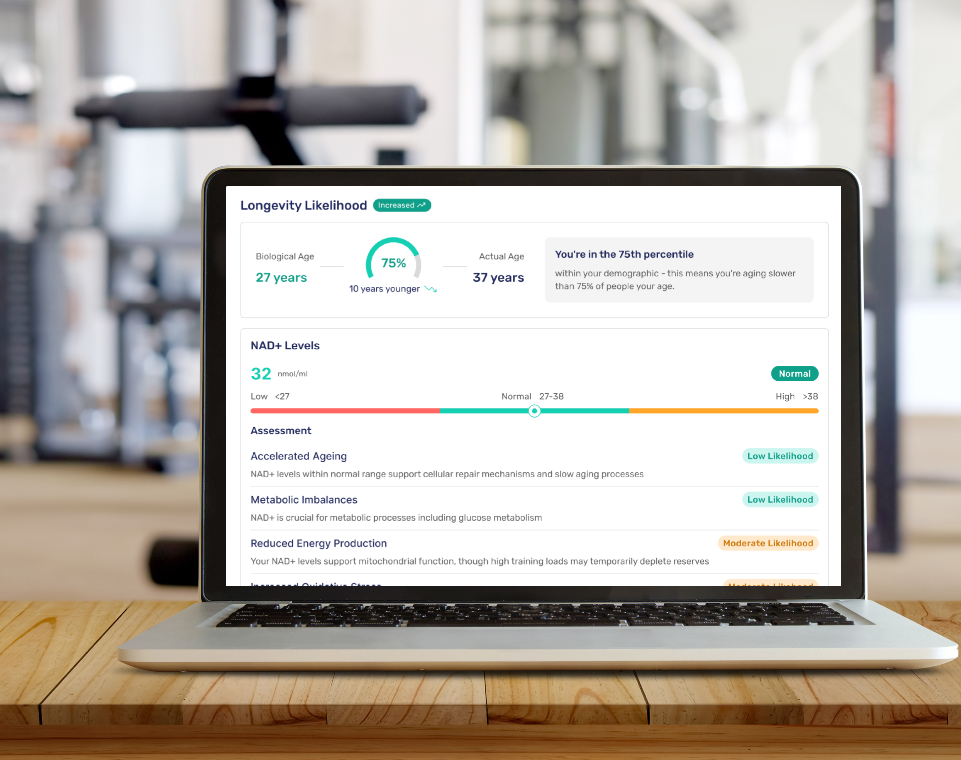
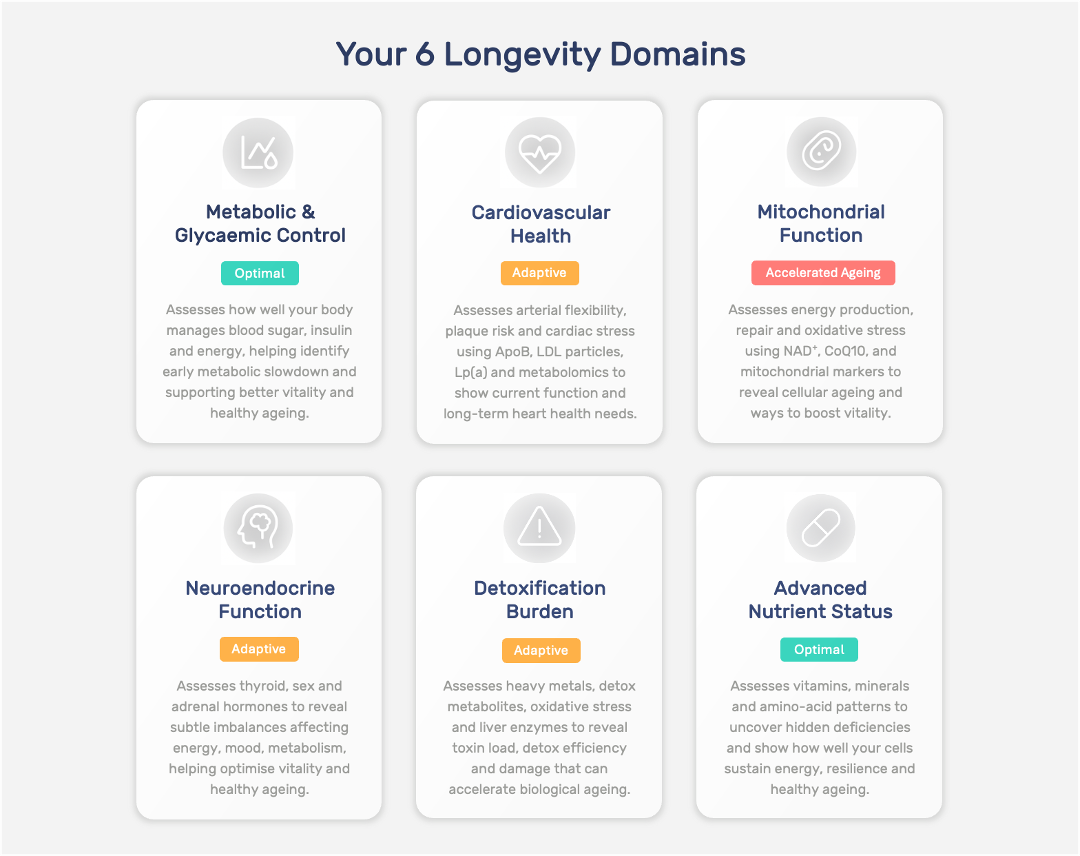
The Longevity Blueprint is an advanced assessment of how your body is ageing internally, combining deep biomarker analysis and functional health testing to map your healthspan. It measures the core systems that drive ageing - metabolic control, cardiovascular health, cellular energy, hormones and nutrient status - to show how well your body is performing and where silent risks may lie.
Your Longevity Blueprint
i-screen’s Longevity Blueprint analyses data points across metabolic regulation, mitochondrial efficiency, NAD⁺ status, inflammatory signalling, hormonal balance, nutrient sufficiency, detoxification capacity and cardiovascular risk markers, providing a detailed view of how your body is functioning beneath the surface.
By integrating these biomarkers into a single, cohesive framework, we build a precise and nuanced picture of what is accelerating, or protecting, your biological ageing. The result is a clear, personalised map of your physiology, translated into meaningful, easy-to-understand insights so you know exactly what your body needs to age well and maintain long-term vitality.
What you get with your Longevity Blueprint
Comprehensive insight into your biology
A deep analysis of over 60+ metabolic, mitochondrial, cardiovascular, hormonal and inflammatory and markers to reveal what’s driving your biological ageing.
Your health data in one simple dashboard
Track results, trends and improvements over time through your personalised Longevity Dashboard, bringing all key biomarkers together in one place.
Clarity on strengths and ageing accelerators
Understand where your body is performing well, where early dysfunction is emerging, and which systems benefit most from targeted optimisation.
Personalised, evidence-based recommendations
Receive clear, science-backed guidance across nutrition, supplements, lifestyle, sleep and stress to support healthier ageing.
What's included
Longevity Blueprint Snapshot
Your Longevity Blueprint turns advanced biomarkers and genetic insights into a clear, personalised roadmap for ageing well. It shows your biological age and key systems - metabolism, cardiovascular health, mitochondria, hormones, nutrients and detox capacity - highlighting where you’re thriving and where support is needed. Colour-coded domains make results easy to interpret, giving you a holistic view of your healthspan and the steps to enhance how you feel and function.
Biological Age - PhenoAge
The PhenoAge Blood Biomarker Test provides a comprehensive assessment of your biological age using a set of nine key blood biomarkers.
NAD
NAD does not occur directly in food. However, the building blocks for NAD, which are vitamins and amino acids, can be found in various foods. These building blocks are then absorbed by the body and converted into NAD through metabolic processes.
Full Hormone Panel
This hormone blood test measures levels of the key hormones and androgens that play an important role in governing masculinity and fertility.
Adrenal Function (Serum)
Two of the most important hormones that impact athletic performance are cortisol and DHEA, the long-lasting stress hormones produced by the adrenal glands. Cortisol has a catabolic effect which mobilises the body’s nutritional resources for fuel. DHEA has an opposing anabolic effect and coverts food into living tissue. In order to achieve your fitness goals cortisol and DHEA must be in proper balance.
Thyroid Function
Your thyroid gland produces hormones that regulate growth and energy expenditure. Thyroid disorders are quite common, and many people don’t have any symptoms at all. This thyroid test screens for the thyroid hormones that play a key role in regulating the body’s metabolism.
Full Blood Count
A full blood count provides a good snapshot of overall health and screens for a variety of disorders. It is used to assess immune function, infection, and anaemia, as well as nutritional status and exposure to toxic substances.
Metabolic Markers
With type 2 diabetes glucose builds up in the blood leading to problems with the heart, kidneys, eyes, nerves, and blood vessels. Unlike a regular blood sugar test, the HbA1c blood test is not affected by short-term changes, so even though you may have had high blood sugar on occasion, a good HbA1c result can show that you’re doing a good job of controlling your blood sugar levels over time.
Bone Health
Calcium and vitamin D play a critical role in maintaining bone health. When you don’t get enough calcium, you increase your risk of developing osteoporosis and stress fractures. This blood test measures your total and corrected calcium levels, your vitamin D levels, and also checks for gout.
Cholesterol
Lipids and cholesterol are fat-like substances in your blood. Some are necessary for good health, but when you have a high level of cholesterol in your blood, a lot of it ends up being deposited in the walls of your arteries and other vital organs. Lifestyle choices including diet, exercise and alcohol intake can all influence cholesterol levels and your risk of developing heart disease.
Liver Function
Your liver processes drugs and alcohol, filters toxic chemicals, stores vitamins and minerals, and makes bile, proteins and enzymes. This liver function test examines enzymes and other markers for evidence of damage to your liver cells or a blockage near your liver which can impair its function.
Kidney Function
Your kidneys filter waste from your body and regulate salts in your blood. They also produce hormones and vitamins that direct cell activities in many organs and help to control blood pressure. When the kidneys aren't working properly, waste products and fluid can build up to dangerous levels creating a life-threatening situation.
Pancreatic Function
Proteins, fats, and carbohydrates are broken down by stomach acids, enzymes produced by the pancreas, and bile from the liver. This process also releases micronutrients. This blood test measures the levels of enzymes produced by the pancreas.
Inflammation
Inadequate recovery from exercise or overtraining can result in inflammation and muscle damage.
Trace Minerals
Like vitamins, minerals are substances found in food that your body needs for growth and health. There are two kinds of minerals - macrominerals and trace minerals. Your body needs just small amounts of trace minerals which include iron, copper, zinc and selenium.
Macrominerals
Like vitamins, minerals are substances found in food that your body needs for growth and health. There are two kinds of minerals - macrominerals and trace minerals. Macrominerals are minerals your body needs in larger amounts.
Water Soluble Vitamins
Water-soluble vitamins are not stored in the body. The body absorbs what it needs and then usually excretes the excess in your urine. The body needs a continuous supply through a steady daily intake. B vitamins are a class of water-soluble vitamins which play important roles in cell metabolism, converting food into fuel and metabolising fats and proteins. They are important for the nervous system and brain function as well as a healthy liver, hair, skin and eyes, and they also strengthen the immune system.
Fat Soluble Vitamins
The fat soluble vitamins are soluble in lipids. These vitamins are usually absorbed in fat globules that travel through the lymphatic system of the small intestines and into the general blood circulation within the body. These fat soluble vitamins are then stored in body tissues.
Test instructions
Fast from all food and drink other than water for at least 8 hours, and no more than 12 hours prior to your test. Please note some collect centers require this test to be performed before 10am.
Visit the collection centre within one hour of waking for the most accurate hormone test measurements.
You’ll receive your venous blood (4 vials), and blood spot kit in the mail, along with logistics for your sample collection. Prepaid postage and packaging is included.
Results for this test typically available in 2-3 weeks and will be published in your online dashboard.